The Top 25 Belongs to Two Conferences
There are 136 FBS teams. The 25 hardest schedules in 2026 all belong to the SEC or the Big Ten.
North Carolina, at #26, is the first team from any other conference. Every slot above it is filled by one of the 16 SEC schools or one of the nine toughest Big Ten roads. No ACC team, no Big 12 team, nobody from the Group of Five comes close.
That is the surface story, and it is the one everybody expects. The more interesting story is underneath it: the two leagues did not get here the same way, and they are not moving in the same direction.
How the metric works
Every 2026 opponent is scored 0 to 10 based on their 2025 strength. A team’s schedule difficulty is the composite of those opponents, then ranked across all 136 FBS teams. A 10.0 is the toughest slate in the country. FCS opponents score 0.
Two things this does not do. It does not know about 2026 roster turnover, transfers, or coaching changes, because it is anchored to last season’s team quality. And it does not adjust the final score for home and away, though the per-game breakdowns show venue for each matchup.
That makes it a schedule shape metric, not a prediction. It tells you whose road is hard. It does not tell you who wins.
The SEC does not have a soft landing spot
All 16 SEC teams rank in the top 24 nationally. The average SEC difficulty score is 8.27. The range across the entire conference runs from 10.0 down to 7.6, a spread of just 2.4 points.
| Rk | Team | 2026 | 2025 | Move |
|---|---|---|---|---|
| 1 | Texas | 10.0 | 7.9 (#16) | +15 |
| 2 | Arkansas | 9.0 | 8.7 (#5) | +3 |
| 4 | Oklahoma | 8.8 | 7.9 (#14) | +10 |
| 5 | Florida | 8.6 | 9.5 (#3) | -2 |
| 7 | Alabama | 8.3 | 9.2 (#4) | -3 |
| 8 | Georgia | 8.3 | 7.6 (#17) | +9 |
| 9 | Kentucky | 8.3 | 8.4 (#8) | -1 |
| 10 | Auburn | 8.1 | 7.1 (#28) | +18 |
| 11 | LSU | 8.1 | 8.2 (#11) | 0 |
| 13 | Mississippi State | 8.1 | 7.6 (#19) | +6 |
| 14 | Missouri | 8.1 | 6.6 (#41) | +27 |
| 18 | Ole Miss | 7.9 | 7.4 (#25) | +7 |
| 19 | Tennessee | 7.9 | 6.3 (#45) | +26 |
| 22 | South Carolina | 7.6 | 7.9 (#15) | -7 |
| 23 | Texas A&M | 7.6 | 8.2 (#13) | -10 |
| 24 | Vanderbilt | 7.6 | 6.8 (#38) | +14 |
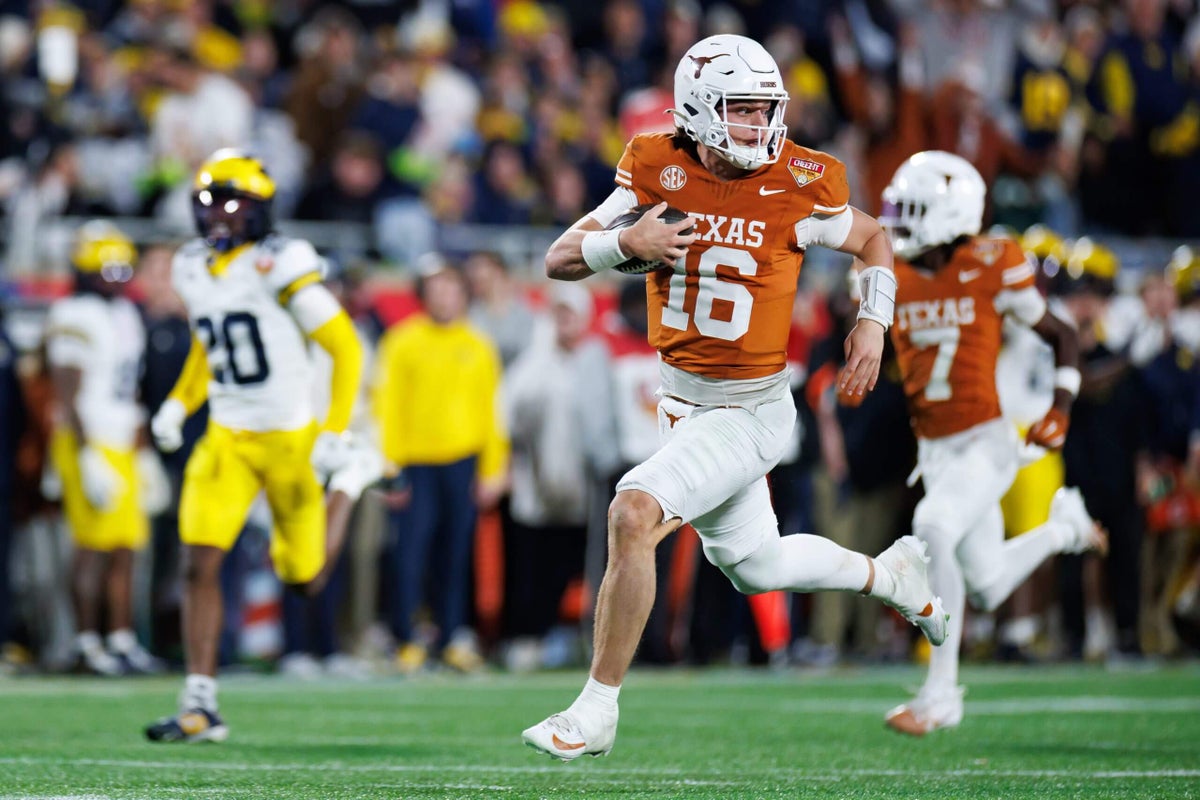
Texas at a perfect 10.0 is the hardest schedule in the country, up from #16 a year ago. But the teams that actually define the conference’s shape are at the bottom of the table, not the top. Vanderbilt has the easiest schedule in the SEC and it is still the 24th hardest in America.
That is the part that travels. In most conferences, the bottom of the SOS table is a genuine break. In the SEC there is no break at all.
The Big Ten got easier
The Big Ten average is 7.31, and it fell from 7.55 in 2025. The SEC average rose from 7.83 to 8.27 over the same span.
In 2025 the two leagues were separated by 0.28 points. In 2026 the separation is 0.96. The gap more than tripled, and it did so because the leagues moved in opposite directions.
| Rk | Team | 2026 | 2025 | Move |
|---|---|---|---|---|
| 3 | Michigan | 9.0 | 8.2 (#12) | +9 |
| 6 | Ohio State | 8.6 | 7.6 (#20) | +14 |
| 12 | Michigan State | 8.1 | 7.1 (#31) | +19 |
| 15 | Nebraska | 8.1 | 6.6 (#42) | +27 |
| 16 | Purdue | 8.1 | 8.7 (#7) | -9 |
| 17 | USC | 8.1 | 7.6 (#23) | +6 |
| 20 | Washington | 7.9 | 6.1 (#50) | +30 |
| 21 | Northwestern | 7.6 | 6.1 (#49) | +28 |
| 25 | Indiana | 7.4 | 8.2 (#10) | -15 |
| 33 | Minnesota | 6.9 | 6.1 (#48) | +15 |
| 34 | Oregon | 6.9 | 8.4 (#9) | -25 |
| 35 | UCLA | 6.9 | 10.0 (#1) | -34 |
| 38 | Iowa | 6.7 | 7.1 (#30) | -8 |
| 41 | Illinois | 6.4 | 7.6 (#18) | -23 |
| 42 | Maryland | 6.4 | 5.8 (#57) | +15 |
| 47 | Penn State | 6.2 | 7.1 (#34) | -13 |
| 49 | Wisconsin | 6.2 | 10.0 (#2) | -47 |
| 53 | Rutgers | 6.0 | 7.6 (#21) | -32 |
Nine Big Ten teams are top 25. The other nine are not, and four of them sit outside the top 40. Rutgers at #53 has an easier road than 52 other teams in the country, and it is the softest schedule in either conference by a wide margin.
The Big Ten spread runs 9.0 down to 6.0, a full 3.0 points. That is 25 percent wider than the SEC’s spread. Two conferences, two very different internal shapes: the SEC is a compressed block of hard, and the Big Ten is a long tail.
The teams whose record will lie to you
Six swings large enough to change how a season reads.
Wisconsin, #2 to #49. The single largest move in either conference, a 47 spot drop. The Badgers went from a 10.0 in 2025 to a 6.2 in 2026. A seven win Wisconsin season this year is not the same accomplishment a seven win season was last year, and the record alone will not tell you that.
UCLA, #1 to #35. Had the hardest schedule in the country last season and now sits mid pack. Same direction as Wisconsin, nearly the same magnitude.
Rutgers, #21 to #53. The biggest beneficiary of Big Ten schedule rotation. If Rutgers takes a step forward in the standings, the schedule deserves a share of the credit.
Washington, #50 to #20. The largest jump in either league at 30 spots. The Huskies could improve as a team and get worse in the win column.
Missouri and Tennessee, both up 26 or more. Missouri climbs from #41 to #14 and Tennessee from #45 to #19. Two SEC teams that had comparatively navigable 2025 roads and lost that cushion entirely.
Texas, #16 to #1. Not the biggest mover, but the destination matters. Nobody in the country has a harder assignment.
What this does and does not settle
The top 25 result is real and it is stark. Two conferences own every hard schedule in college football, and it is not close.
But the direction of travel is the finding worth holding onto. The SEC tightened and got harder. The Big Ten loosened and got easier, mostly at the bottom. If you are comparing a 9-3 SEC team to a 9-3 Big Ten team in December, those two records were not earned against the same field, and the distance between them widened this year.
One caveat worth stating plainly. Because opponent quality is anchored to 2025 results, any team that improves or collapses sharply in 2026 will make this board look wrong in hindsight. That is a known limit of every preseason SOS model, including this one. It is a map of the road, not a forecast of the drive.
